




Oxford fabric is a type of woven textile that is known for its durability and strength. It is made by weaving threads of different thicknesses in an alternating pattern, which creates a textured and durable fabric. The fabric is usually made from a blend of cotton and polyester, although other blends of natural and synthetic fibers may also be used. Oxford fabric is commonly used for clothing, bags, upholstery, and outdoor gear because of its high quality and long-lasting durability.
Advantages of Oxford Fabric
Durability
Durability is one of the most notable characteristics of Oxford fabric, which is why it is a popular choice for outdoor gear such as bags, luggage, and tents. Oxford fabric is made with a tight weave and is known for its strength and durability, even when exposed to wear and tear. The different types of Oxford fabric have varying levels of durability, with higher denier fabrics being more durable than lower denier fabrics. Denier refers to the weight of the fabric, and higher denier fabrics are generally thicker and stronger than lower denier fabrics.
Water resistance
Water resistance is another important feature of Oxford fabric. Due to its tight weave and coating, Oxford fabric is naturally water-resistant. However, the level of water resistance varies among the different types of Oxford fabric, with higher denier fabrics offering greater water resistance. It is important to note that while Oxford fabric is water-resistant, it is not completely waterproof, so additional waterproofing treatments may be necessary for certain applications.
Abrasion resistance
Abrasion resistance is another key characteristic of Oxford fabric. The tight weave and durable fibers of Oxford fabric make it highly resistant to abrasion, making it ideal for outdoor gear that is subject to a lot of wear and tear. Higher denier fabrics are more abrasion-resistant than lower denier fabrics and are therefore better suited for applications where durability is a top priority.
Weight capacity
Weight capacity is an important consideration when choosing Oxford fabric for outdoor gear. The weight capacity of Oxford fabric depends on its denier and the way it is woven. Higher denier fabrics can support heavier weight loads than lower denier fabrics. When choosing Oxford fabric for a specific application, it is important to consider the weight capacity needed for the product.
Texture
Texture is another characteristic of Oxford fabric that varies depending on the denier and the weaving pattern. Higher denier fabrics have a more pronounced texture than lower denier fabrics, which can affect the appearance and feel of the finished product. The texture of Oxford fabric can also affect its abrasion resistance and water resistance, so it is important to choose a fabric with the appropriate texture for the intended use.
Breathability
Breathability is not a strength of Oxford fabric. The tight weave of Oxford fabric and the coatings used to make it water-resistant can limit its ability to allow air to pass through. As a result, it may not be the best choice for applications where breathability is important, such as clothing.


High density oxford fabric is a highly dependable material that can be used in a wide variety of applications. It is well-known for its durability, being able to withstand wear and tear over time, making it an excellent choice for outdoor gear, tents, bags, and more.
Why Choose Us
High quality products
We always put customer needs and expectations in the first place, refine on, continuous improvement, to seek every opportunity to do better, to provide customers with their expectations of quality products, to provide customers with the most satisfactory service at anytime.
Competitive Prices
We offer our products at competitive prices, making them affordable for our customers. We believe that high-quality products should not come at a premium, and we strive to make our products accessible to all.
One stop solution
From the begining inquiry and throughout the entire process until you receive the goods. we are dedicated to supporting you every step of the way.
Professional team
We have a team of skilled and experienced professionals who are well-versed in the latest technology and industry standards. Our team is dedicated to ensuring that our customers get the best service and support possible.
Types of Oxford Fabric
Plain oxford fabric
This smooth fabric is soft and doesn't wrinkle because of the way it was woven. Two woven yarns were mixed with a yarn with a higher grammage, which makes the fabric both smooth and soft.
Pinpoint oxford
Pinpoint Oxford is a kind of Oxford fabric that is made with finer yarn and a tighter basket weave, making it softer and smoother than regular Oxford cloth. The sheen isn't as strong as Royal Oxford's. Its strands are thinner and lighter than those used to make standard Oxford fabric, but thicker than those used to make the Royal Oxford variety. Clothes made from pinpoint fabric are very comfortable, but people should be careful around sharp objects when wearing them.
Royal oxford
It's the sleekest of the Oxford weaves and has the usual sheen and feel. Produced from even finer and lighter threads than those used in normal Oxford and pinpoint Oxford, this fabric is noticeably smoother, shinier, and finer than its counterparts. It has a more noticeable texture and noticeable yarn shine because of its more prominent and complex weave than a pinpoint or standard Oxford. Royal Oxford is a great choice for formal events.
What Is the Obvious Difference Between Oxford Cloth and Canvas
Oxford cloth is a new type of fabric with various functions and wide applications. At present, the main products on the market include: lattice, full-stretch, nylon, and tige. Oxford cloth is also called Oxford spinning. It uses polyester polyester-cotton blended yarn and cotton yarn to interweave, and adopts double-weft or square weave. It has the characteristics of easy washing and quick drying, soft hand feeling, good moisture absorption and comfortable wearing. Oxford spinning is a kind of fabric weaving method, which refers to the overlapping order of horizontal and vertical cotton yarns when weaving. Oxford spinning fabrics actually belong to the middle and low grade of shirt fabrics. Oxford cloth has soft color, soft body, good air permeability, comfortable to wear, easy to wash and quick-drying, and is mostly used as shirts, sportswear and pajamas. There are many varieties of products, including plain color, bleaching, colored warp and white weft, colored warp and color weft, medium and light color striped patterns, etc.; and also made of polyester-cotton yarn.
Canvas (canvas) is a thicker cotton or linen fabric. Named because it was originally used for sails. Generally, plain weave is used, and a small amount of twill weave is used. Multi-strand yarn is used for warp and weft. Canvas are usually divided into two categories: coarse canvas and fine canvas. Coarse canvas, also known as canopy cloth, has good waterproof performance and is used for automobile transportation and open-air warehouse cover and tents in the field. Fine canvas is used to make labor protection clothing and its supplies. After dyeing or printing, it can also be used as shoe materials, luggage fabrics, handbags, backpacks, table cloths, table cloths, etc. In addition, there are rubber canvas, shielding canvas for fire and radiation, and canvas for paper machine. But it has no elasticity, feels a bit hard to the touch, and wear-resistant. You will see it after a long time.
The difference between the two is: Oxford cloth is generally used on chemical fiber fabrics to express more, with soft hand feeling, good moisture absorption, comfortable wearing, easy to wash, quick-drying, and elasticity. Multi-purpose polyester-cotton blended yarn and cotton yarn are interwoven, and the weft-weight flat or square flat weave is adopted. The canvas includes cotton canvas, polyester-cotton canvas or nylon/cotton canvas, but it is not elastic, feels a bit hard to the touch, and wear-resistant. You will see it after a long time. Therefore, in general, both types of cloth have their own advantages, and it is impossible to determine which cloth is better. It can only be said that the corresponding cloth should be selected according to different uses.
Plain weave for canvas is a tight weave, which makes the fabric stiff, strong, and resistant to water. The texture of coarser canvas fabrics with thicker threads is rough, but as the thread count increases, the surface of canvas fabrics gets smoother.
Even though it is strong, the canvas is a light fabric. It comes in different weights, but based on its strength, it is considered a soft fabric. This means that you can easily use big pieces of canvas. For instance, it is a great material for making sails for ships. Large boats need big pieces of fabric that won't make the boat heavier.
Especially if it is made of cotton or linen, the canvas can lose its stiffness over time. Over time, natural fibers will get softer from being washed and worn. You can stop this from happening by using starches or other treatments, but sometimes the gradual softening is a good thing, not a bad thing.
Canvas is mostly a neutral color. It is easy to dye, but it is only treated for a few things other than clothes. Most canvas fabric is naturally an off-white or ecru color. For clothes, though, they can come in a lot of different colors and patterns.

Production Process of Oxford Fabric Waterproof Material
Material selection
The first step in producing Oxford fabric waterproof material is the careful selection of high-quality raw materials, typically the 100% polyester fibers. This type of fiber is chosen for its durability and waterproof properties.
Weaving
Yarns are woven through weaving machines to create the distinctive grid texture of Oxford fabric. This weaving technique imparts the fabric with its unique appearance and durability.
Dyeing
The fabric is immersed in a dye bath containing disperse dyes, which are finely ground color particles. The dye bath is heated to high temperatures, allowing the dye particles to sublimate and deeply penetrate the polyester fibers. After dyeing, excess dye is removed through rinsing, and then the fabric undergoes fixation through heat treatment to ensure color fastness and prevent fading during subsequent washing and exposure to sunlight.
Coating treatment
Once weaving is complete, Oxford fabric usually undergoes a coating treatment to impart waterproof functionality. Coatings, such as polyurethane or fluorocarbon agents, are applied to the fabric's surface to form a waterproof layer.
Usage of Oxford Fabric Waterproof Material
Outdoor appare
Fabric waterproof material is commonly used in outdoor clothing such as raincoats, hiking pants, and windbreakers. It provides protection against rain and wind while maintaining breathability for wearer comfort.
Luggage and backpacks
Oxford fabric waterproof material also finds extensive application in crafting luggage, backpacks, and travel bags. Its durability and waterproof properties shield belongings from external elements.
Outdoor gear
Waterproof Oxford fabric is also employed in the production of outdoor equipment such as tents, sunshades, and camping mats. It aids in keeping the interior dry, enhancing overall outdoor comfort.
Home furnishings
Oxford fabric waterproof material is utilized for creating home furnishings like tablecloths and chair cushions. These products prevent liquid seepage and safeguard furniture in everyday household life.
Other uses
Oxford fabric waterproof material is also employed for crafting umbrellas, parasols, car seat covers, and more, catering to diverse waterproof needs across various domains.

Factors to Consider When Choosing Oxford Fabric for Bags, Luggage, and Tents
Intended use
The intended use of the fabric is important when selecting the appropriate Oxford fabric. For example, if you plan to use fabric for outdoor tents, you need a durable and waterproof fabric that can withstand harsh weather conditions. If you are making bags or luggage, you may require a fabric that is lightweight, durable, and resistant to wear and tear.
Climate
The climate in which the fabric will be used is also an important factor to consider. For example, if you plan to use the fabric in a cold or wet climate, you may need a fabric that is waterproof and has thermal properties. On the other hand, if you plan to use the fabric in a hot climate, you may need a fabric that is lightweight and breathable.
Weight capacity
The weight capacity of the fabric is also important, especially if you are making bags or luggage. You need to select a fabric that can support the weight of the items you intend to carry without tearing or breaking.
Budget
The cost of the fabric is also a key consideration. You need to select a fabric that is within your budget while still meeting your requirements in terms of durability, weight, and climate suitability.
Care and Maintenance of Oxford Fabric
Washing and drying
Oxford fabric can be washed in a washing machine using a gentle cycle and cold water. Avoid using hot water, bleach, or fabric softeners as these can damage the fabric. Hang the fabric to dry or use a low heat setting on your dryer. Avoid high heat settings as they can cause the fabric to shrink or become damaged.
Storage
When storing Oxford fabric, it’s important to keep it in a cool, dry place away from direct sunlight. Avoid storing the fabric in damp or humid areas as this can promote the growth of mold and mildew. If possible, store the fabric in a breathable fabric bag or wrap it in acid-free tissue paper to prevent creases and wrinkles.
Repairing
If your Oxford fabric gets ripped or torn, it’s important to repair it as soon as possible to prevent the damage from getting worse. To repair the fabric, use a strong and durable thread and a sewing machine or hand-stitch the fabric. Be sure to match the color and weave of the fabric as closely as possible to ensure a seamless repair.
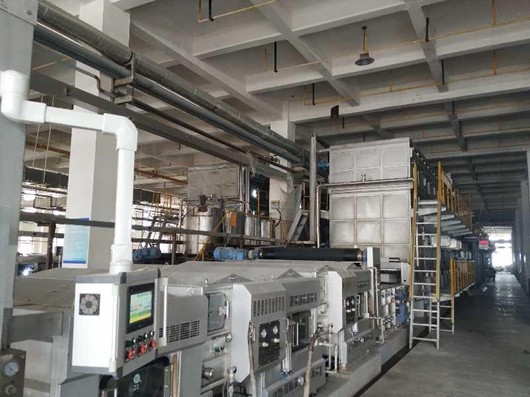
Our Factory
The factory covers an area of 100,000 square meters and has more than 800 employees. The international Dept. is located in Jiaxing, a city with more than one thousand years history of textile trading and production. We integrate printing and dyeing processing, strong technical force, reliable product quality and advanced technology. The production process has a one-stop production capacity of dyeing-finishing-deep processing. It mainly produces all kinds of cotton canvas, cotton gauze, cotton poplin, cotton elastic series, polyester cotton, nylon cotton, polyester cotton, mirofiber, chemical fiber and rayon fabric series.




FAQ
As one of the most professional oxford fabric manufacturers and suppliers in China, we're featured by quality products and good service. Please rest assured to wholesale custom made oxford fabric at competitive price from our factory.