




Twill fabric is a durable and strong woven fabric characterized by diagonal parallel ridges or lines, which are formed by an offset in how the yarns are woven. It is usually made from cotton, silk, wool, or synthetic fibers and is available in various weights and finishes. Twill fabric is popular for its durability, stiffness, and resistance to wrinkles and creases. Common uses of twill fabric include clothing (such as pants, jackets, and skirts), upholstery, and home décor.
Advantages of Twill Fabric
Durability
Twill fabrics are known for their sturdiness and strength, making them ideal for use in various applications that require a tough and long-lasting material. The tight weave pattern also makes it resistant to wear and tear, making it a popular choice for heavy-duty clothing items like workwear, uniforms, and outdoor gear.
Comfortable
Despite its durability, twill fabric is also soft and comfortable to wear, making it an excellent choice for clothing items that require both toughness and comfort. The diagonal weave pattern also allows for better airflow, making it a cooler and more breathable fabric.
Versatility
Twill fabric comes in a variety of different colors and patterns, making it a versatile material that can be used in various applications. It can be used in both casual and formal settings, and is suitable for everything from home decor to fashion accessories.
Easy to care for
Twill fabric is relatively easy to care for, and can be machine washed and dried without losing its strength or shape. It is also resistant to wrinkles and creases, making it a low-maintenance choice for clothing and household items.


Cotton twill material is a versatile and durable fabric that is widely used in fashion, home decor, and industrial applications. As a cotton twill manufacturer, we pride ourselves on producing high-quality fabrics that meet the needs of our customers.
Why Choose Us
High quality products
We always put customer needs and expectations in the first place, refine on, continuous improvement, to seek every opportunity to do better, to provide customers with their expectations of quality products, to provide customers with the most satisfactory service at anytime.
Competitive Prices
We offer our products at competitive prices, making them affordable for our customers. We believe that high-quality products should not come at a premium, and we strive to make our products accessible to all.
One stop solution
From the begining inquiry and throughout the entire process until you receive the goods. we are dedicated to supporting you every step of the way.
Professional team
We have a team of skilled and experienced professionals who are well-versed in the latest technology and industry standards. Our team is dedicated to ensuring that our customers get the best service and support possible.
Twill fabrics, as opposed to plain weave fabrics, have two sides that are not the same. The front of the twill is known as the ‘‘technical face, '' and the back is known as the ‘‘technical back.'' The technical face side of a twill weave fabric has the most noticeable wale; it is usually more durable and appealing, is most commonly used as the fashion side of the fabric, and is visible throughout weaving. If there are warp floats on the technical face (the warp crosses over two or more wefts), there will be filling floats on the technical back (the weft crosses over two or more warps). If the twill wale rises to the right on one side, it rises to the left on the other. Twill fabrics are woven with no ‘‘up'' and ‘‘down'' directions.
Twill weave is rarely used in sheer fabrics. Printed twills (where a design is printed on the cloth) are far less prevalent than printed plain weaves since a twill surface already has interesting texture and design. Printed twills are often done on lightweight textiles.
Because stains and soiling are less visible on the irregular surface of twills than on a smooth surface, such as plain weaves, twills are frequently used for strong work apparel and durable upholstery. Denim is a twill fabric, for example.
Because twills have less interlacing than other weaves, the yarns may move more freely, making them softer and more malleable, and they drape better than plain-weave textiles. Twills also recover better from creases than plain-weave textiles. The yarns can be packed closer together to make high-count fabrics when there are fewer interlacing. Higher count fabrics, such as high-count twills, are more durable and resistant to air and water.
Foulard or surah, herringbone, houndstooth, serge, sharkskin, and twill flannel are all examples of even-sided twills. Cavalry twill, chino, covert, denim, drill, fancy twill, gabardine, and lining twill are all warp-faced twills.

How Is Twill Fabric Used
Twill fabric and its derivatives may be used to make a wide variety of different types of apparel and home textiles. This fabric is most well-known for its use in denim jeans; all types of jeans feature this iconic diagonal pattern. For comparison, duck pants are also made from denim, but they feature plain weave fabric instead of twill.
While this fabric was commonly used to make jackets in the past, this practice is less common these days. Instead, it's more common to see this type of weave used to make polo shirts and similar types of attire. Twill fabric isn't frequently used to make undershirts, underwear, or any other type of light fabric that makes direct contact with the skin. Instead, most of these textile products are made with plain weave fabrics.
In the arena of home textiles, it's common to find twill used in bed sheets. Since this type of fabric can be made in very high thread counts, it is in high demand for sheets, and it is also used to make light blankets and the covers for duvets and mattresses. In addition, this type of fabric may also be used to make other types of homewares like tablecloths, curtains, and towels. Certain types of twill, such as diamond twill, are commonly used to make various types of carpets and rugs. This fabric may even be used to make wall hangings.
How Is Twill Fabric Made
While the characteristic diamond pattern of twill is the same no matter which type of fiber is made to use this fabric, different production processes are used to make the various fabrics that are woven to make this textile. Cotton, for instance, is a natural fiber, and it is derived from the fluffy fibers that surround the seed of the cotton plant when it is mature.
Once these fibers are harvested, they are packed into bales and sent to cotton yarn production plants. These bales are unpacked, their contents are mixed, and then the fibers are carded into long, thin strands. After these strands are combed and washed, they are spun into yarn. This cotton yarn may be dyed at this point, or it may simply be loaded onto large reels and sent to a textile factory to be made into a finished product.
Polyester is also commonly used to make twill, but a very different process is used to make this textile than that which is used to make cotton yarn. This fabric is made from a compound called ethylene, which is found in crude petroleum oil. This compound is then reacted with another chemical called dimethyl terephthalate, and the resulting monomer alcohol is bonded with terephthalic acid to make the polyester polymer.
This substance is molten after it is created, and it is then formed into long ribbons and cooled. These ribbons are then broken up, and they are melted once more. Finally, this refined polyester is extruded through a spinneret to make fabric fibers, and these fibers are then subjected to a number of treatments before they are loaded onto spools.
Once a textile fiber has been required, a number of different methods can be used to make it into twill. Technically, any type of fabric weave can be called "twill fabric," and there are a great many weaving patterns that are used to make this textile. In general, a twill fabric is woven by passing the weft thread over one or more warp threads and then passing it under two or more warp threads. This technique results in what is called a "step" pattern that appears diagonal once the finished fabric is made.

Choose the right needle and thread
When sewing twill, it's important to use a heavy-duty needle, such as a denim needle or a leather needle, as the fabric is thick and sturdy. It is also recommended to use heavy-duty thread, such as polyester or nylon thread, to ensure that the stitches are strong and durable.
Use the correct stitch
It is recommended to use a straight stitch or a triple stitch when sewing twill. Straight stitches are simple and easy, while triple stitches are stronger and more durable.
Iron the fabric
Before sewing, it's important to iron twill fabric to remove any wrinkles or creases. Use a hot iron to gently press the fabric to avoid damaging it.
Secure the fabric with pins
To prevent the fabric from moving while sewing, it is important to secure it in place. Use straight pins or clips to secure the fabric together.
Sew slowly and carefully
When sewing twill, it is important to sew slowly and carefully. This will ensure that the stitches are straight and even.
Finish the edges
To prevent the edges of twill fabrics from fraying, it is important to finish them. You can use a zigzag stitch or an overlock stitch to finish the edges.
Clean the fabric
After sewing, it is important to wash twill fabric to remove dirt or stains. Use a gentle cycle and cold water to avoid damaging the fabric.
What Is Twill Used For
Denim, Jeans are undoubtedly the most ubiquitous and popular application of the twill weave. Denim is often made of cotton or a cotton mix.
Chinos, Cotton twill cloth is used to produce chinos and khaki pants. The weight of the cloth distinguishes chinos from jeans. Jeans are made of heavier fibers, whereas chinos are made of lighter fibers.
Tweed, houndstooth, and herringbone fabrics are available. Tweed and houndstooth are twill weave patterns made from numerous distinct colored yarns. Herringbone can also be made by weaving various colored yarns in a twill weave or by using the same color yarns to create a directed design.
Work attire, The twill weave produces an extremely durable fabric that is perfect for outdoor and industrial work clothing like overalls and jumpsuits that are subjected to a lot of wear.
Upholstery, Many upholstery fabrics and home design items, such as couches, chairs, cushions, and curtains, are manufactured with the twill weave and must withstand years of repeated use.
Linens for the bed and bath, Because the twill weave allows for large thread counts, it is used for sheets, beds, and towels. increased thread count Cotton materials are often softer and more durable, making them ideal for everyday use.
Which Season Is Twill Fabric For
Twill fabric can be used for any season, at any time. Since twill refers to the weave type, the characteristics of the fabric may differ based on what fibers were used. Twill fabrics made with cotton fibers are more breathable, and thus are more suitable for warmer seasons like spring and summer. Polyester twill fabrics tend to be more insulating and are more suitable for colder weather. That being said, there is no set rule for when to wear twill fabric. A lightweight and thin twill made from polyester can keep a wearer cool, while a heavyweight and thick twill fabric sourced from cotton can keep a wearer warm.
What Is the Difference Between Cotton and Twill Fabric
Cotton is a soft, lightweight and breathable material which is made from the fibers of the cotton plant. It is a staple in the fashion and home textiles industry due to its versatility, wide range of colors, and easy care. Cotton can be found in a variety of forms including denim, flannel, muslin, and sateen, to name a few. It is also known for its absorbency, which makes it a popular choice for towels, bedding, and clothing worn close to the skin.
On the other hand, is a type of cotton fabric which has a distinctive diagonal pattern woven into it. This pattern is formed by the way the yarns are interlaced during the weaving process. Twill fabrics are usually heavier and more durable than regular cotton fabric, which makes it ideal for items that need to be strong, such as workwear or upholstery. Twill fabric can also come in a variety of weights and finishes, such as brushed or coated, which can affect its texture and appearance.
While cotton and twill are both made from cotton fibers, they differ in their weave pattern, weight, and durability. Cotton is softer and more lightweight, while twill is heavier and more durable with a diagonal pattern. The choice between the two will depend on the intended use of the fabric, as well as personal preference for texture and appearance.
Our Factory
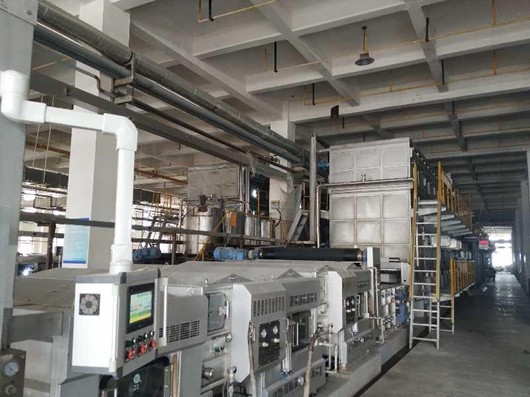
The factory covers an area of 100,000 square meters and has more than 800 employees. The international Dept. is located in Jiaxing, a city with more than one thousand years history of textile trading and production. We integrate printing and dyeing processing, strong technical force, reliable product quality and advanced technology. The production process has a one-stop production capacity of dyeing-finishing-deep processing. It mainly produces all kinds of cotton canvas, cotton gauze, cotton poplin, cotton elastic series, polyester cotton, nylon cotton, polyester cotton, mirofiber, chemical fiber and rayon fabric series.




FAQ
As one of the most professional twill fabric manufacturers and suppliers in China, we're featured by quality products and good service. Please rest assured to wholesale custom made twill fabric at competitive price from our factory.